• Home
  • About the Journal
    • Aim and Scope
    • Editorial Board
    • Bibliographic Listings
    • Peer Review Process
    • Journal Metrics
    • Subscriptions
    • RSS Feeds
  • Policies
    • Publication Ethics & Malpractice Statment
    • Editorial Policy
      • Peer Review Process
    • Plagiarism Policy
    • Copyright and OA policy
    • Retraction and Withdrawal Policy
  • For Authors
    • Instruction to Authors
    • Article Processing Charges
    • Frequently Asked Questions
    • Downloads
  • Contacts
Pharmacognosy Research
An Open Access Journal in Pharmacognosy and Natural Products


Submit your article

Pharmacognosy Research
  • Articles in Press
  • Current Issue
  • Past Issues
  • Search Articles
  • Submit Article
Home / webadmin2

webadmin2

webadmin2's picture

Latest posts from webadmin2

Latest

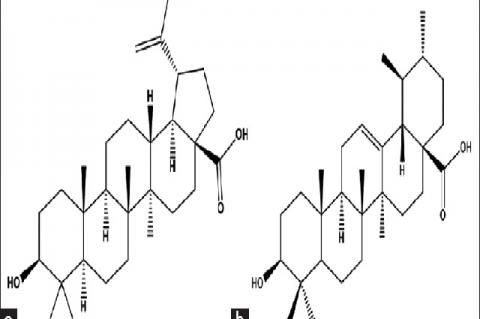
Isolated compounds from the fruits of M. dendron: Betulinic acid (a) and ursolic acid (b)

The Potent Inhibitors of Protein Tyrosine Phosphatase 1B from the Fruits of Melaleuca leucadendron

4 years 5 months ago [comment_count]
Read more
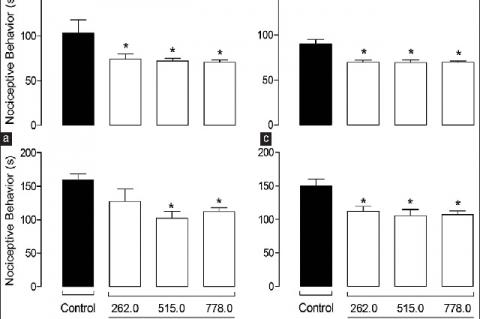
Orofacial antinociceptive effect of ILEX. (a and b) Represent the acute experiment where animals were treated with doses of 262.0–778.0 mg/kg of infusion, p.o. (c and d) Represent the chronic experiment, in which mice received the same doses, twice a day, for 15 days. In both cases, 1 h after last treatment, 20 μl of formalin 2.5% was injected into the right upper lip, and the evaluation of nociceptive behavior was performed in the first phase (a and c) and in second phase (b and d). Mean ± standard error o

Ilex paraguariensis Promotes Orofacial Pain Relief After Formalin Injection: Involvement of Noradrenergic Pathway

4 years 5 months ago [comment_count]
Read more
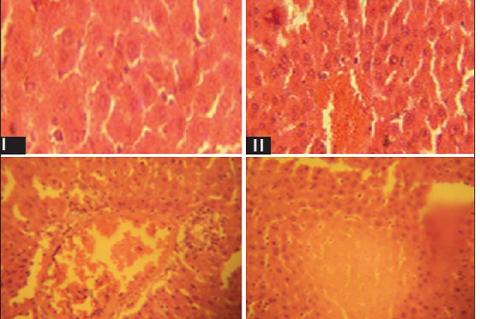
Photomicrograph of liver sections of rats treated with ethanol extract of Ageratum conyzoides and sodium arsenite for 7 days (Mag X400). (I) Control showing no visible lesion. (II) EEAC only (100mg/kg body weight) showing no visible lesion. (III) Sodium arsenite (2.5mg/kg body weight) showing diffused vacuolation of hepatocytes, congestion and cellular infiltration by mononuclear cells. (IV) EEAC + SA (100mg/Kg and 2.5mg/Kg body weight) showing very mild vacuolar degeneration of hepatocytes

Acute Sodium Arsenite‑Induced Hematological and Biochemical Changes in Wistar Rats: Protective Effects of Ethanol Extract of Ageratum conyzoides

4 years 5 months ago [comment_count]
Read more
Thin layer chromatography photo documentation of alcoholic extract of Kutaja choorna. Track 1 - alcoholic extract of Kutaja choorna 4 μl; 2–8 μl; 3–12 μl. Solvent system - 9:1 (toluene:ethyl Acetate)

A Clinico‑analytical Study on Seed of Wrightia antidysenterica Linn. as a Therapeutic Emetic Agent (Vamaka Yoga) in the Management of Psoriasis

4 years 5 months ago [comment_count]
Read more
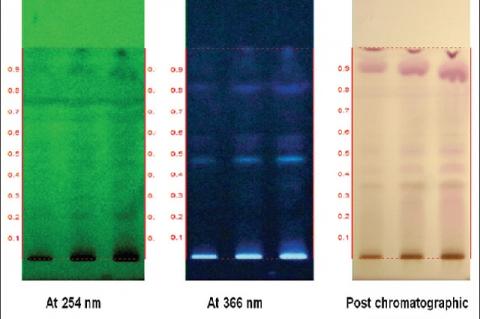
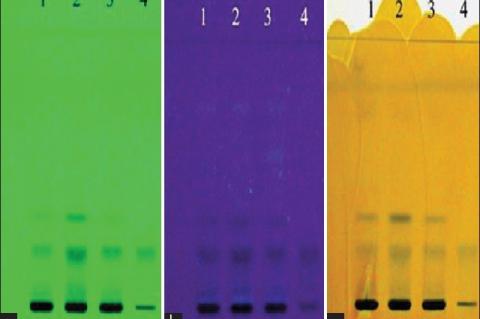
High‑performance thin layer chromatography fingerprint of Woodfordia fruticosa samples and ellagic acid standard with solvent system A. (a) At ultraviolet 254 nm; (b) at ultraviolet 366 nm; (c) after spraying with 5% methanolic FeCl3 reagent. 1: Hyderabad, Telangana, sample of Woodfordia fruticosa flowers; 2: Bangalore, Karnataka, sample of Woodfordia fruticosa flowers; 3: Nahan, Himachal Pradesh, sample of Woodfordia fruticosa flowers; 4: Standard ellagic acid

Chromatographic Profiling of Ellagic Acid in Woodfordia fruticosa Flowers and their Gastroprotective Potential in Ethanol‑induced Ulcers in Rats

4 years 5 months ago [comment_count]
Read more

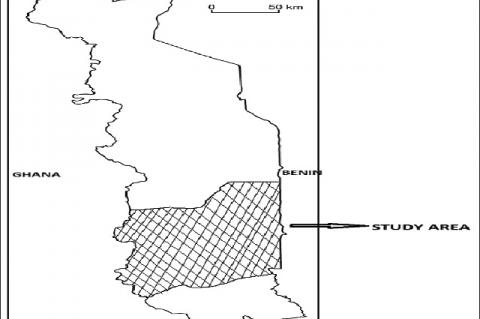
Ethnobotanical Study of Medicinal Plants Used for the Treatment of Malaria in the Plateau Region, Togo

4 years 5 months ago [comment_count]
Read more
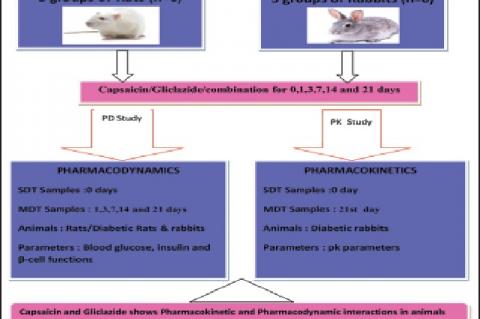
Effect of Capsaicin on Pharmacodynamic and pharmacokinetics of Gliclazide in Animal models with Diabetes

Effect of Capsaicin on Pharmacodynamic and pharmacokinetics of Gliclazide in Animal models with Diabetes

4 years 5 months ago [comment_count]
Read more

Pages

  • « first
  • ‹ previous
  • …
  • 16
  • 17
  • 18
  • 19
  • 20
  • 21
  • 22
  • 23
  • 24
  • …
  • next ›
  • last »
  • Latest
  • Popular
Gallic Acid Calibration Curve for Total Phenolic Content.
Phytochemical Analysis and Tissue Restoration Activity of Nelumbo nucifera Extract
Sep 29, 2025 - 14:49
Harvested Plants of Piper longum.
Comparative HPTLC Analysis of Piperine Content in Roots of Piper longum L. Cultivated with Bio Formulations
Sep 29, 2025 - 14:45
Corrigendum: Anti-quorum Sensing Potential of Adenanthera pavonina
Sep 28, 2025 - 19:29
A Decade of Research on Plant-Based Anticancer Compounds: A Scientometric Analysis
Sep 28, 2025 - 19:26
More
Quantification of phenolic and flavonoid content of various extract of leaves of Hardwickia binata Roxbs
In vitro Cytotoxicity Evaluation of Hardwickia binata Roxbs against Human Breast Cancer Cell Line MCF-7 and Human Cervical Cancer Cell Line HeLa
Leaf Extracts of Glyphaea brevis Attenuate High Blood Glucose and Lipids in Diabetic Rats Induced with Streptozotocin
3-dimensional interactions of ligands with receptor NADPH Oxidase.
In silico Investigation on Phytoconstituents in Pamburus missionis S. for Antioxidant Activity

About

Pharmacognosy Research (Pharmacogn Res.)

[ISSN: Print -0976-4836, Online - 0974-8490] [http://www.phcogres.com], It provides peer-reviewed original research articles from the field of Natural Products. The journal serves an international audience of scientists and researchers in a variety of research and academia by quickly disseminating research findings related to Medicinal Plants and Natural Products.

It is a peer reviewed journal aiming to publish high quality original research articles, methods, techniques and evaluation reports, critical reviews, short communications, commentaries and editorials of all aspects of medicinal plant research. The journal is aimed at a broad readership, publishing articles on all aspects of pharmacognosy, and related fields. The journal aims to increase understanding of pharmacognosy as well as to direct and foster further research through the dissemination of scientific information by the publication of manuscripts. The submissions of original contributions in all areas of pharmacognosy are welcome.

Abstracting and Indexing Information

The journal is registered with the following abstracting partners:
Baidu Scholar, CNKI (China National Knowledge Infrastructure), EBSCO Publishing's Electronic Databases, Ex Libris – Primo Central, Google Scholar, Hinari, Infotrieve, National Science Library, ProQuest, TDNet, Wanfang Data

The journal is indexed with, or included in, the following:
EMBASE/ Excerpta Medica, Emerging Sources Citation Index, Index Copernicus, Web of Science

For any other information, write to editor.phcogres@phcog.net

Search form

Announcement

ESCI

We are pleased to inform you that the Pharmacognosy Research is now covered by Clarivate Analytics (formerly Thomson Reuters) products and services. The journal is indexed and abstracted in Emerging Sources Citation Index (ESCI) since 2017. The ESCI is a new index in the Web of Science Core Collection.

Tags

(+)-Catechin
(-)-Epicatechin
1
1- diphenyl-2-picrylhydrazyl
1-diphenyl-2-picryl-hydrazil); Ferric Reducing Antioxidant Power
1-diphenyl-2-picrylhydrazyl-radical scavenging assay
10‑di‑epi‑Cubenol
12-didehydroandrographolide
12‑epilycodoline N‑oxide
14-deoxy-11
14-deoxyandrographolide
15-lipoxygenase inhibitory activity
16S ribosomal RNA
16S rRNA
18S Ribosomal ribonucleic acid
1H‑NMR
1‑chloro‑2
1‑Diphenyl‑1‑picrylhydrazyl
1‑diphenyl‑2‑picrylhydrazyl
1‑Diphenyl‑2‑picrylhydrazyl
1‑diphenyl‑2‑trinitrophenylhydrazine scavenger
2
2-Benzenedicarboxylic acid diisooctyl ester
2-diphenyl-1-picrylhydrazyl
2-diphenyl-1-picrylhydrazylDPPH
25‑dien‑3‑ol.
2‑diphenyl‑1‑picrylhydrazyl
2‑diphenyl‑1‑picrylhydrazyl radical
2’ azino bis (ethylbenzthiazolene‑6‑sulfonic acid) radical cation assay
2’‑azino‑bis (3‑ethylbenzothiazoline‑6‑sulfonic acid)
2’‑Diphenyl‑1‑picrylhydrazyl
3
3 (4
3 β-taraxerol.
3(4
3-(4
3-dimethyl
3CLPRO
3T3-L1
3T3‑L1
3T3‑L1 cell lines
3‑(4
3‑(S)‑hexahydroxydiphenoyl‑D‑glucose
3’
3’‑hydroxy‑5
4
4-caffeoylquinic acid
4NQO
4‑dinitrobenzene
4‑hydroxyacetophenone
More

Copyright © 2024 Phcog.Net. All rights reserved. | Powered by Manuscript TechnoMedia LLP.

This work is licensed under a Creative Commons Attribution-NonCommercial 4.0 International License. Last updated: 01/06/2021